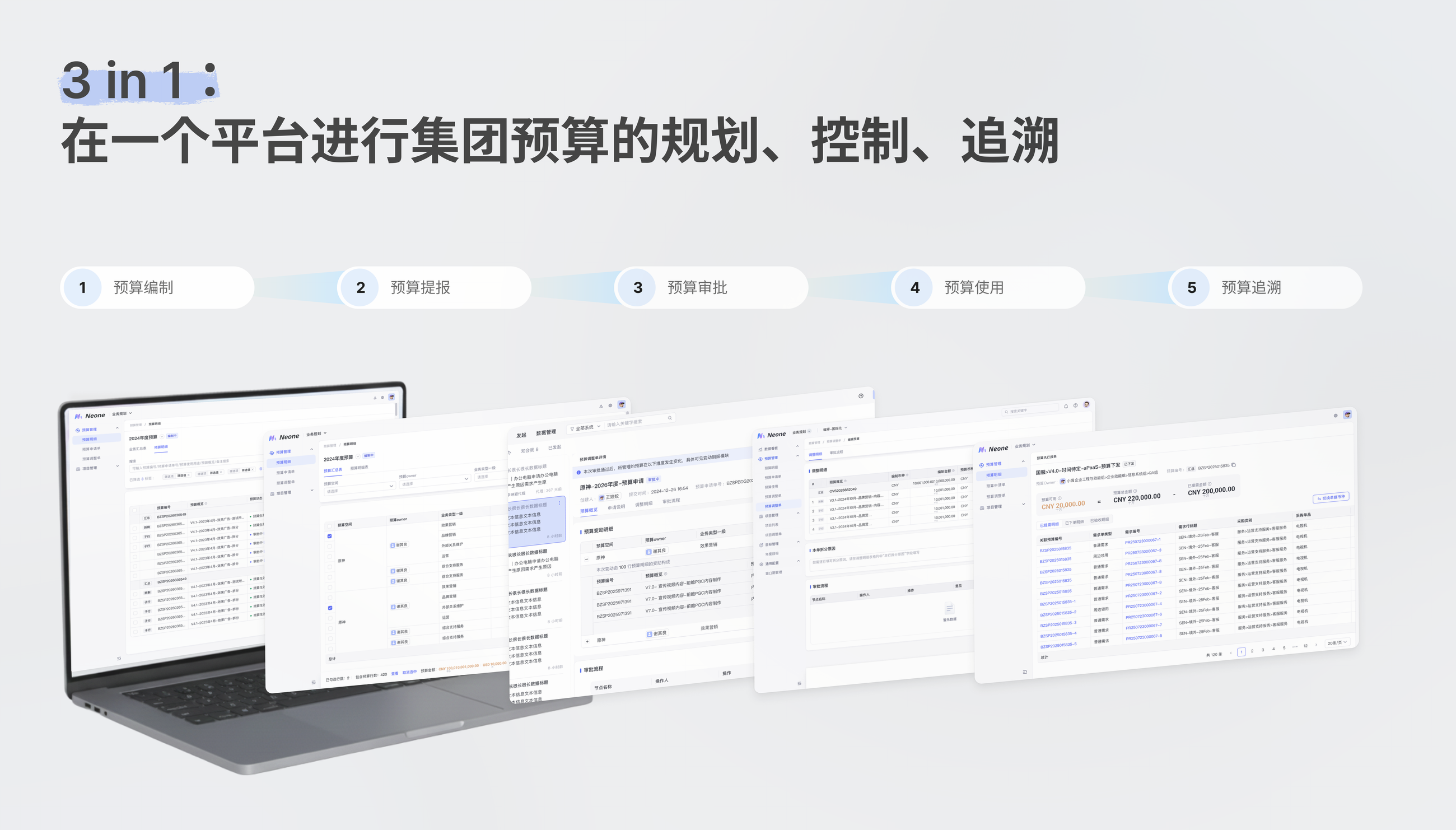
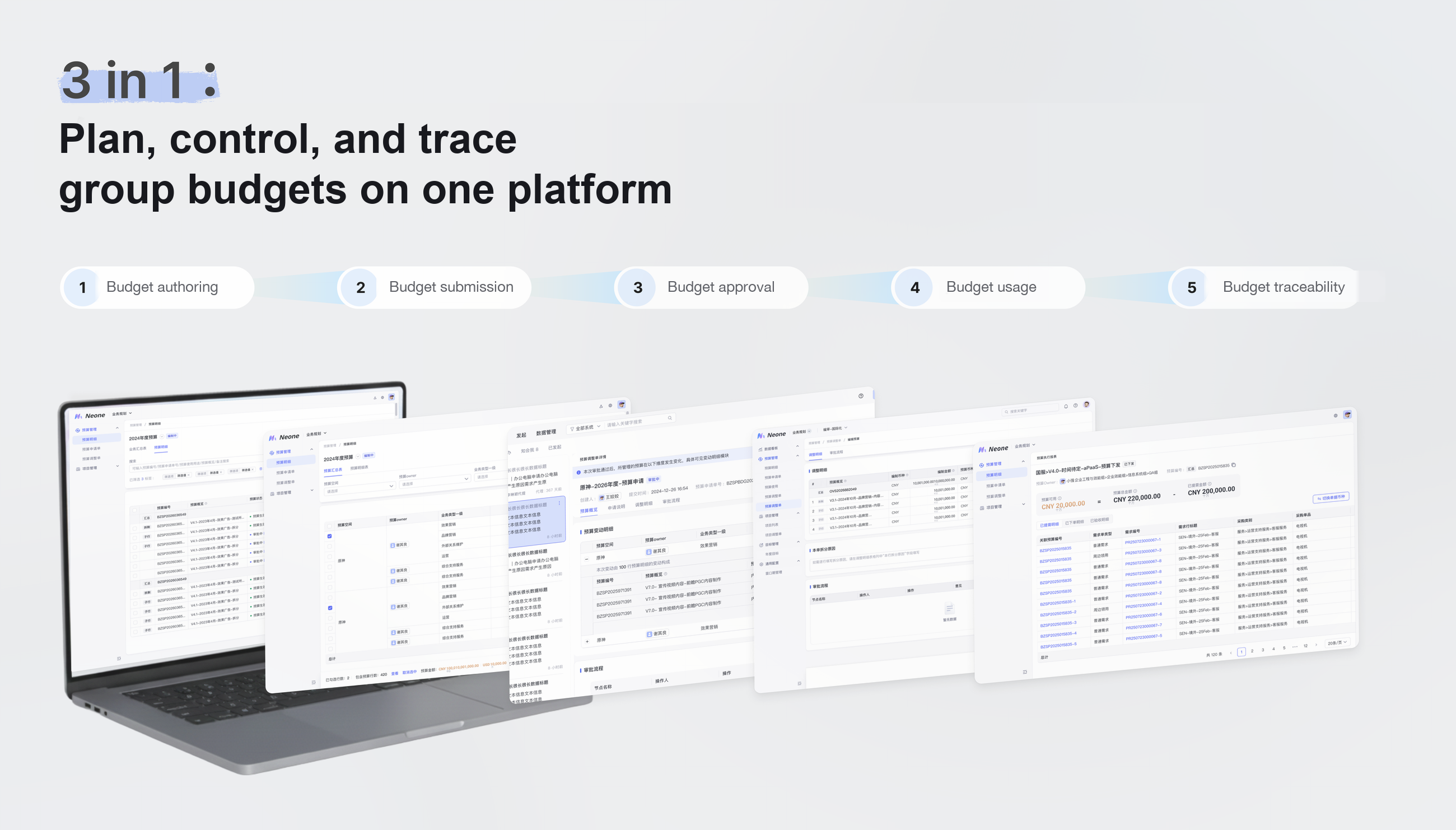
Budget is not just money.
预算不止是钱
It is a planning tool that defines boundaries, enables execution control, and supports later traceability.
它是一个计划工具,定义边界、支撑执行管控,并为后续追溯提供基础。
It is a planning tool that defines boundaries, enables execution control, and supports later traceability.
它是一个计划工具,定义边界、支撑执行管控,并为后续追溯提供基础。
The hard part wasn't the screens — it was pulling planning, control and traceability back onto one shared budget model. The underlying structure and ownership had to align first; only then could the experience hold.
难的不是画页面,而是让规划、控制、追溯回到同一套预算模型上——底层结构和职责先对齐,体验才立得住。
Budget authoring had to start from the right fields and ownership.
预算编制必须从正确的字段和责任归属开始。
Separate which fields represent business objects from those that are only execution details, so a budget can actually be judged.
先分清哪些字段是业务对象、哪些只是执行信息,预算才有判断依据。
A budget line carries clear ownership from authoring, so approval and traceability have something to hold onto.
预算行从编制阶段就明确归属,后续审批与追溯才有抓手。
Budget control actions had to be clearly distinguished in semantics.
预算的管控动作必须在语义上真正区分开。
Used when the spending scenario becomes clearer gradually and the original coarse-grained budget needs to be broken into child budgets.
当业务场景逐步明确时,把原本粗颗粒度的预算继续拆细成多个子预算。
Used when the business changes and an existing budget line needs to be updated, such as changing amount or row information.
当业务事项本身发生变化时,修改已有预算行的信息,例如金额或字段更新。
Managers needed a top-down view of budget movement.
管理者需要一个自上而下看懂预算去向的视角。
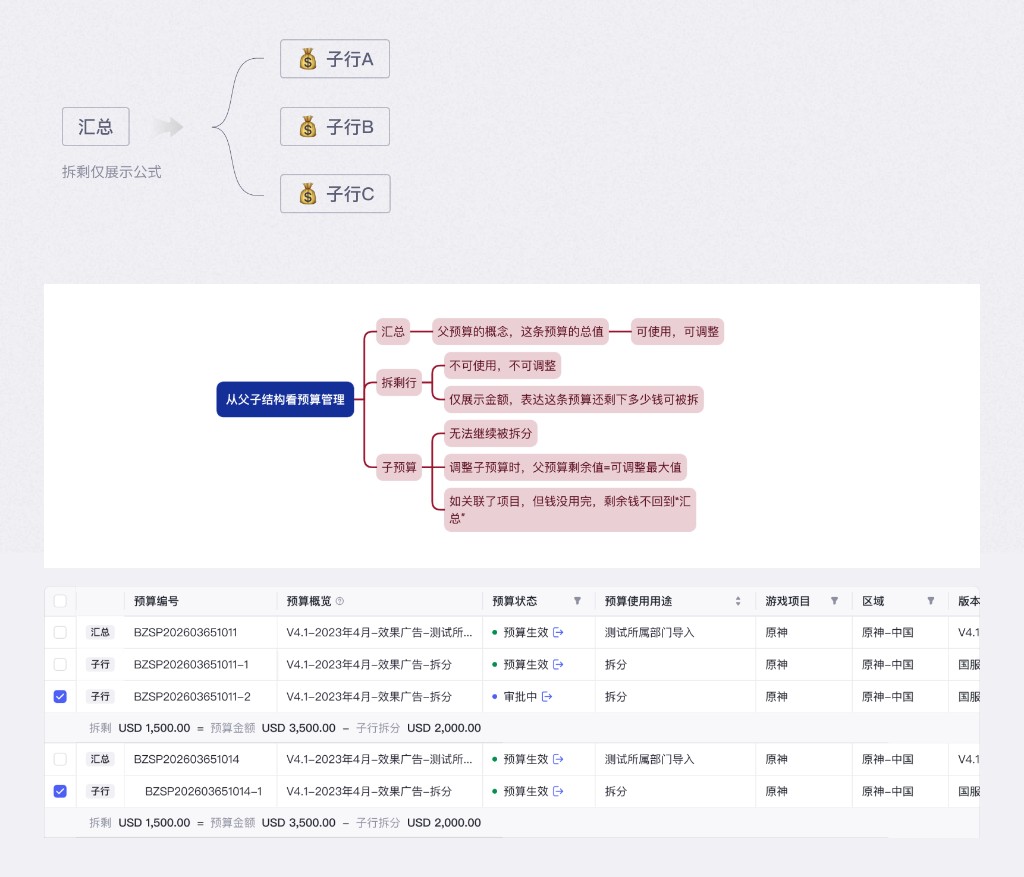
The parent defines the structure and cap; child budgets carry execution. Because users still read how child budgets move under one parent, the system had to support parent-level aggregation and traceability.
父预算定义结构与额度边界,子预算承载执行。由于业务仍需要从父预算视角看懂子预算的去向,系统必须支持父级聚合与后续追踪。
miHoYo's spending controls include capabilities rarely seen in the industry, so the fields are costly to understand — and historical leftovers added fields with no business meaning. Whoever proposes, uses, or approves a budget struggled to read it.
米哈游对资金的管控有不少行业里没有的玩法,相关字段理解成本本就高,加上历史遗留的无业务含义字段——提预算、用预算、审批的人都不容易看懂。
The same status words meant different things on different pages, and single-item vs batch actions were hard to distinguish. Users often could not tell what a budget could do, could not find the right action, or made mistakes because the operation model was unclear.
同一个状态词在不同页面里含义不一致,单条与批量操作也没有清楚区分。 用户经常看不懂一条预算当前能做什么,找不到操作按钮,或者因为用不明白而误操作。
父预算定总额,子预算细分到 KOL / 搭建 / 物料执行级——把控颗粒度很细。
Parent sets the cap; children break it into execution lines — fine-grained control.
同一笔 20W,有没有"拆分",决定了钱是被分配还是被抢占。
For the same 20W, whether a "split" exists decides if money is allocated or grabbed.
额度先定、按需领取,加总不超总额,清晰可追溯。
Cap set first, drawn on demand; sum ≤ cap, clear and traceable.
谁先报谁先占——搭建抢走 15W、挤压其余,总额边界失效。
First-come wins — booth grabs 15W, squeezing the rest; the cap breaks.
结论:在这种细颗粒度的真实业务里,"拆分"是让预算自上而下分配、可追溯的前提,是现阶段必须存在的业务动作。
Takeaway: at this granularity, "split" is the precondition for top-down, traceable budgeting — a mandatory action at the current stage.
This was not a control issue; it was a budget semantics issue.
这不是操作问题,而是预算语义本身发生了混用。
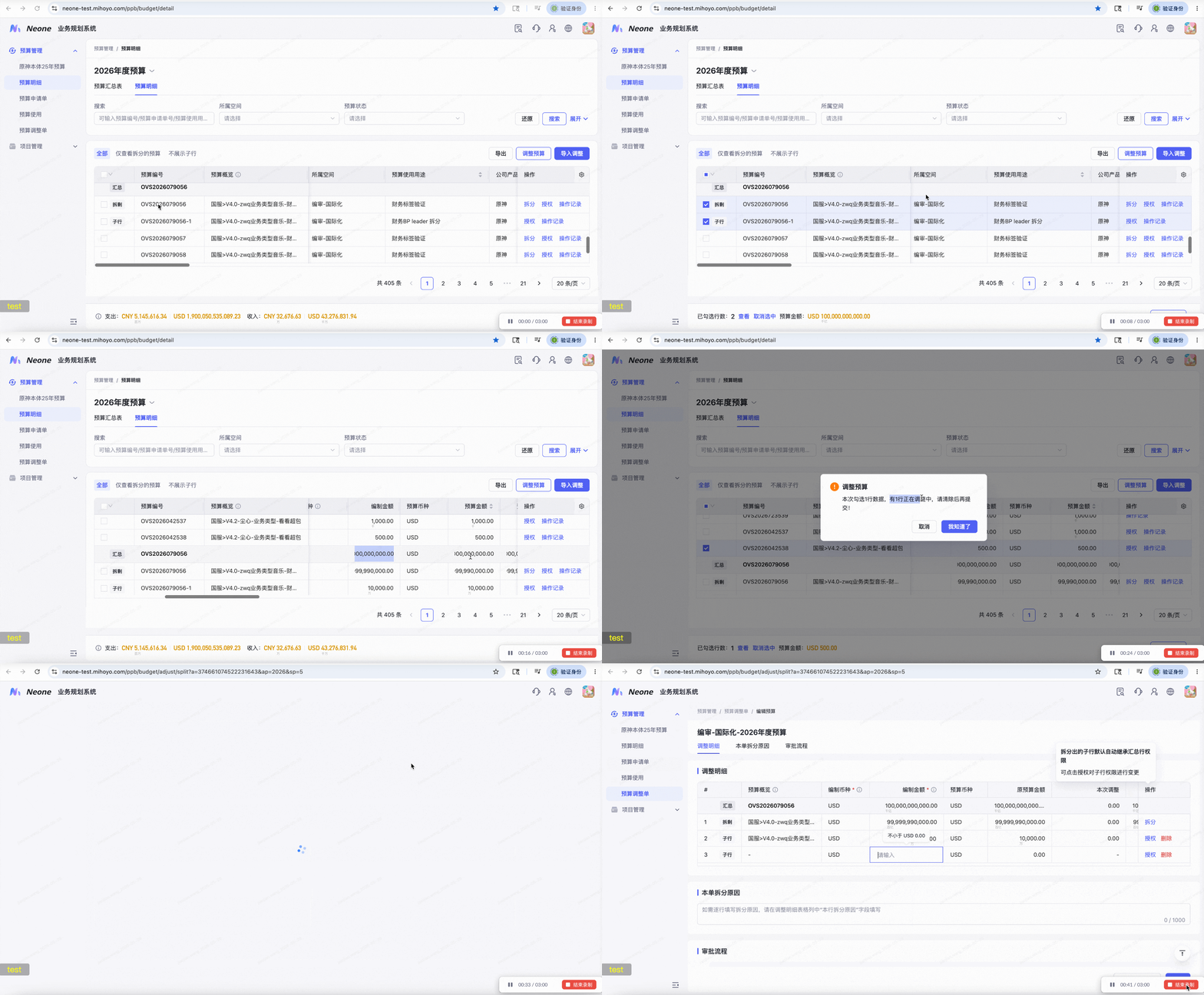
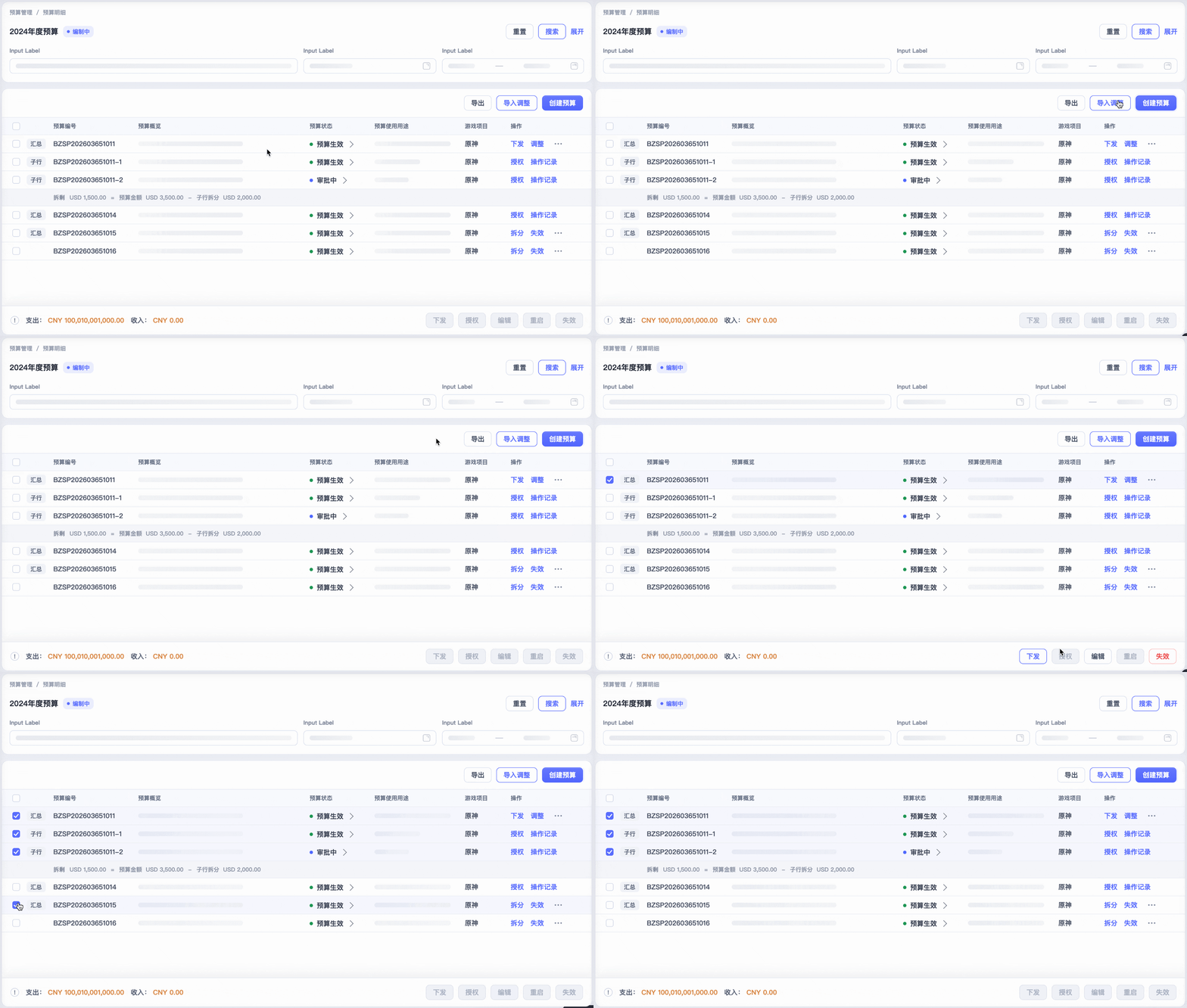
Goal: make split logic visible, executable, and traceable.目标:让拆分逻辑可见、可执行、可追溯。
Keep structure, clarify ownership, formulaize remaining amount.保留结构,明确责任,拆剩公式化。
Remaining row is display-only and non-requestable.拆剩行仅展示,不可直接下需求单。
After approval, auto-generate executable child rows.审批后自动生成可执行子行,父行回归追溯。
No execution; remaining shown by formula.不承载执行,拆剩按公式展示。
Amount = parent; the starting point for further splits.金额 = 父行金额,作为继续拆分的起点。
Execution lives only in child rows while the parent falls back to pure traceability — budget reports stay clean and easy to reconcile.执行只发生在子行,父行回归纯追溯——预算报表天然干净,对账更省心。
A manager-facing summary table, better execution reports, and annual-budget version tracking with over-budget drill-down — so managers can read budget movement top-down.
面向管理者的汇总表、执行报表改进,以及年度预算版本与超包动态查看,让管理者自上而下看清预算流向。
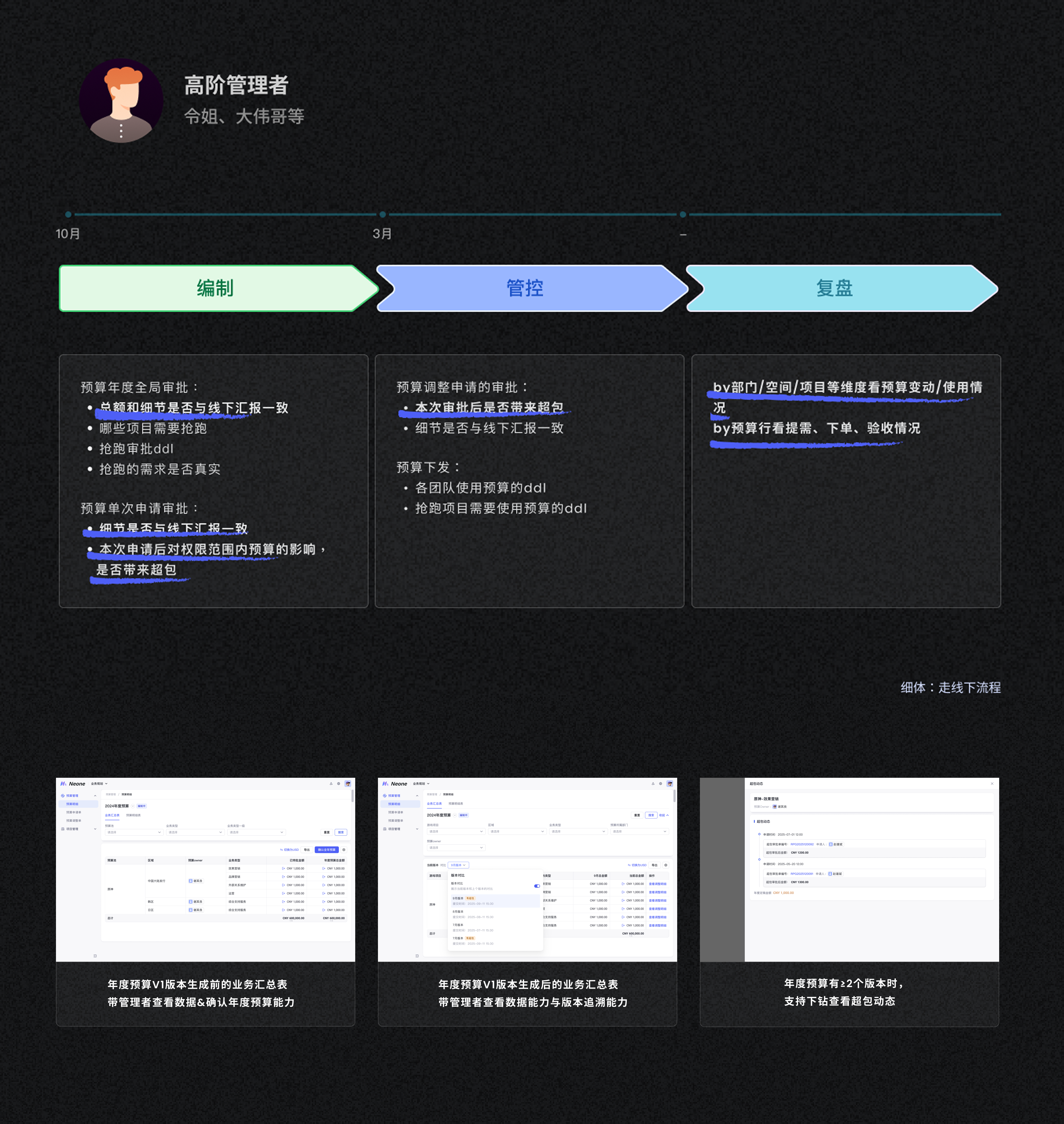
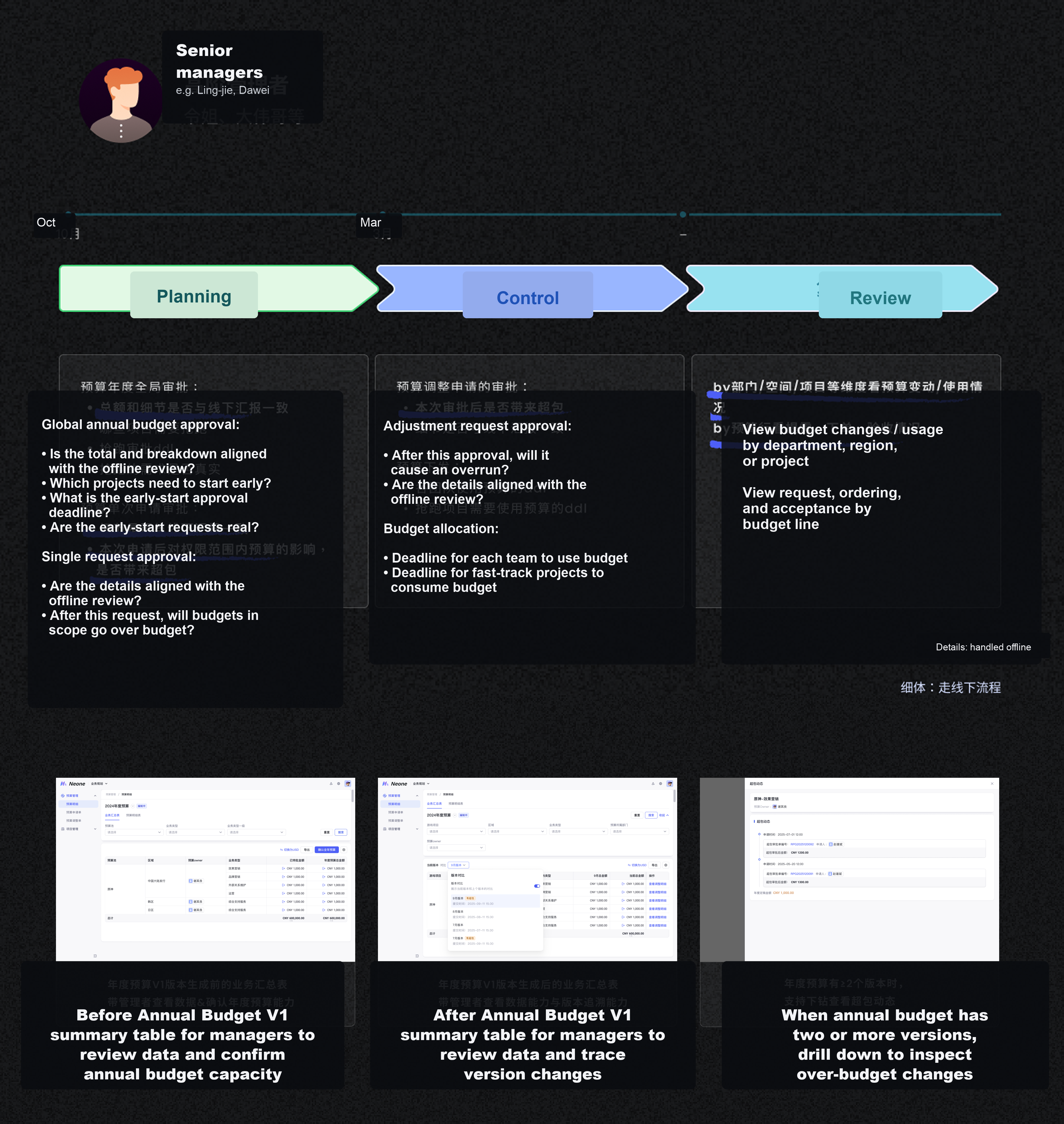
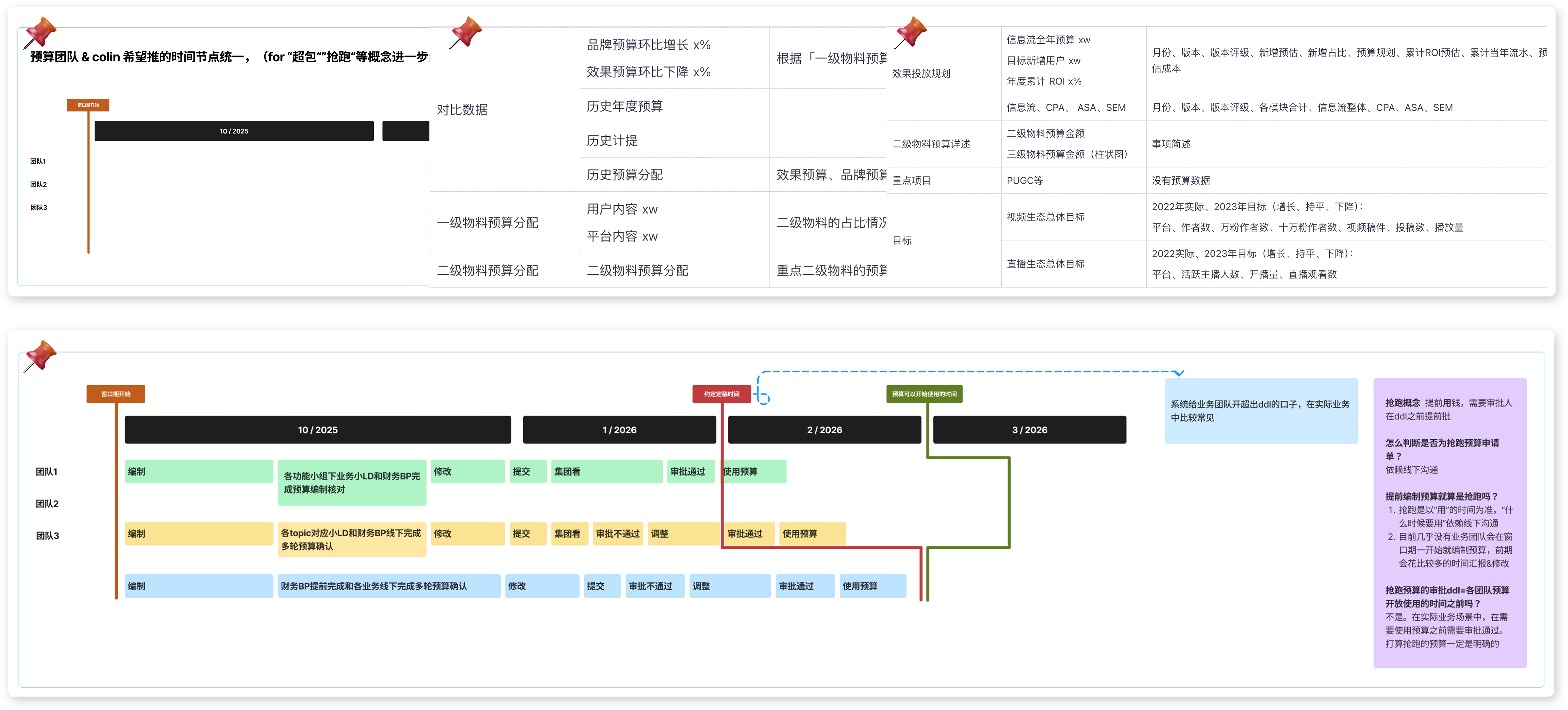
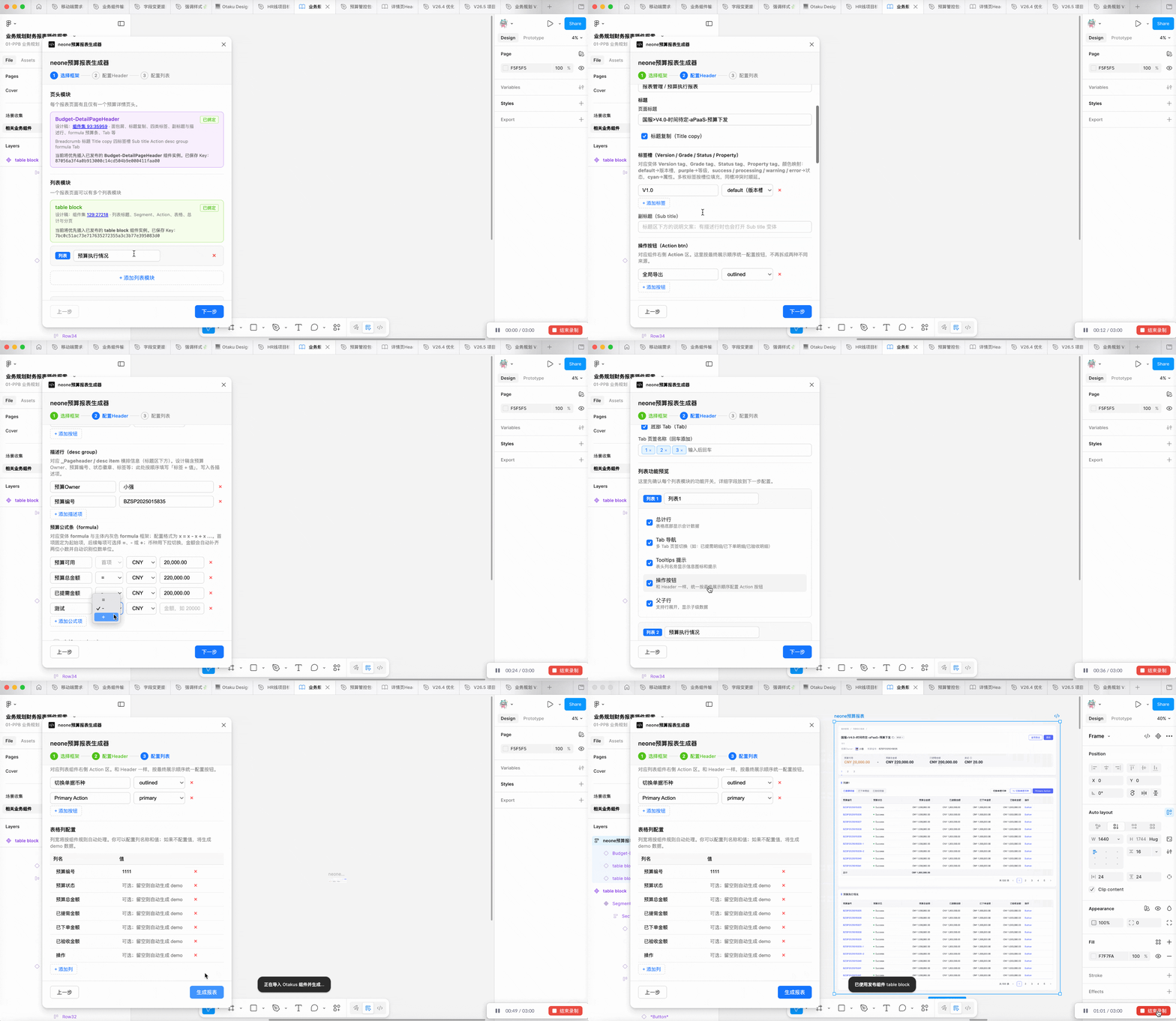
为了让业务快速和 CFO 对齐报表里想看的内容,我做了一个 Figma 插件——业务自己配置数据结构与字段,一键生成符合线上设计规范的报表设计稿。
To help business teams align with the CFO fast, I built a Figma plugin: they configure the data structure and fields themselves, and it outputs an on-spec report design in one click.
Core semantics and the budget reading path are now aligned.
核心语义与预算阅读路径已完成对齐。
Fields match the detail page, so users author in the right business terms and approvers can read intent directly.字段与详情页统一,用户创建时就用对业务语义,审批人能直接看懂。
Data shows a clear drop in approval rejection rate.从数据上看审批驳回率明显降低。
Parent-child aggregation lets managers read where budget goes top-down.父子预算聚合,管理者自上而下看清预算流向。