End-to-end UX design for TikTok's Buy Now Pay Later product in Indonesia — credit application, account management, and repayment — from first sketch to launch.
TikTok 印尼先买后付产品的全链路 UX 设计,覆盖授信、账户管理与还款流程,从零到上线独立完成。
TikTok entered Indonesia's consumer finance market through a strategic partnership with GoTo / Tokopedia, embedding GoPay Later into TikTok Shop to form ShopTokopedia.
TikTok 通过与 GoTo / Tokopedia 的战略合作进入印尼消费金融市场,将 GoPay Later 嵌入 TikTok Shop,形成 ShopTokopedia。
Partnership structure: TikTok does not hold a financial services license in Indonesia. GoPay Later (GoTo Financial) provides the BNPL infrastructure and OJK regulatory compliance, while I owned the complete user experience layer within TikTok Shop.
合作结构:TikTok 在印尼不直接持有金融牌照。GoPay Later(GoTo Financial)提供 BNPL 基础设施和 OJK 监管合规,我负责 TikTok Shop 内的完整用户体验层。
As the sole UX designer, I designed every user-facing interaction from scratch. Our user research team conducted on-site interviews in Indonesia — I collaborated closely with them remotely, synthesizing findings into design decisions in real time.
作为唯一一名 UX 设计师,我从零开始设计了所有面向用户的交互。用研同事前往印尼进行实地访谈,我在线上密切配合,实时将调研发现转化为设计决策。
Credit application, account & billing, repayment — all from zero.
授信申请、账户账单、还款,全部从零设计。
Shopee, Grab, Lazada, GoPay Later, Akulaku, Moca Moca — in depth.
Shopee、Grab、Lazada、GoPay Later、Akulaku、Moca Moca 深度拆解。
Proactively identified pre-launch, with owners and mitigation plans.
上线前主动识别,每条风险均有负责人和后续计划。
Our user research team conducted on-site interviews in Indonesia — I collaborated closely with them remotely, synthesizing findings into design decisions in real time.
用研同事前往印尼进行实地访谈,我在线上密切配合,实时将调研发现转化为设计决策。
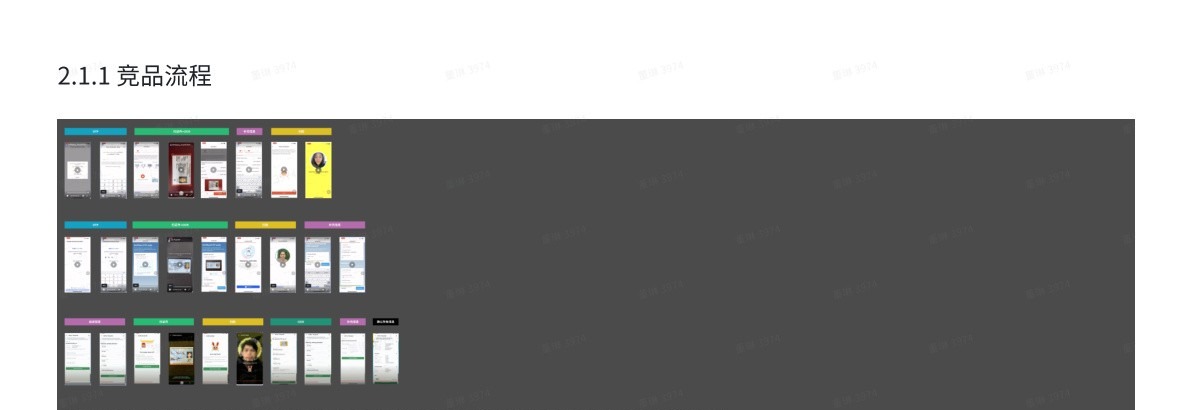
I mapped 6 BNPL products across two axes — e-commerce native vs. third-party lender, and account-level vs. bill-level repayment — then walked through each credit application flow end-to-end to audit field count, KYC method, and drop-off risk.
我系统梳理了 6 款 BNPL 产品,从两个维度建立坐标系:电商自营 vs. 第三方品牌、账户维度还款 vs. 账单维度还款。随后逐一走查每款产品的授信申请全流程,重点审计字段数量、KYC 方式与流失风险节点。
Step labels hide actual field count — users don't see the full form length upfront. Shortest perceived application in the set.
步骤标签遮蔽了真实字段数,用户感知表单最短,同类中开通意愿最高。
Most comprehensive KYC — NIK, selfie, income, employment. PIN set at onboarding and rarely used again; forgetting rate is a known support issue.
KYC 最完整:NIK、自拍、收入来源、工作信息。开通时设 PIN 此后极少使用,遗忘率高是已知客诉。
Checkout-embedded entry minimises context switching. KYC delegated to Kredivo with a mid-flow app handoff — a potential drop-off point.
从结账页直接进入,减少上下文切换。KYC 委托 Kredivo,需跳转第三方 app,存在流失节点。
Reuses existing Grab KYC — existing users skip re-verification entirely. Lowest friction in the set, but locked inside Grab's ecosystem.
复用 Grab 已有 KYC,老用户免重新验证,摩擦最低。但强依赖 Grab 生态,迁移性差。
Most aggressive data collection: blood type, employment history, number of children. The canonical example of how form friction kills conversion.
字段最多:血型、工作经历、子女数量。是「表单摩擦杀死转化率」的典型反面教材,用研中被用户主动提及为放弃原因。
Philippines reference — lighter KYC under a different regulatory environment. Used to understand SE Asia variance, not as a direct model.
菲律宾市场参照,监管不同 KYC 更轻。用于理解东南亚各市场差异,非直接参考对象。
"How do you convert a high-friction financial onboarding inside an entertainment app?"
"如何在一款娱乐 App 里,完成一个高摩擦的金融开通流程?"
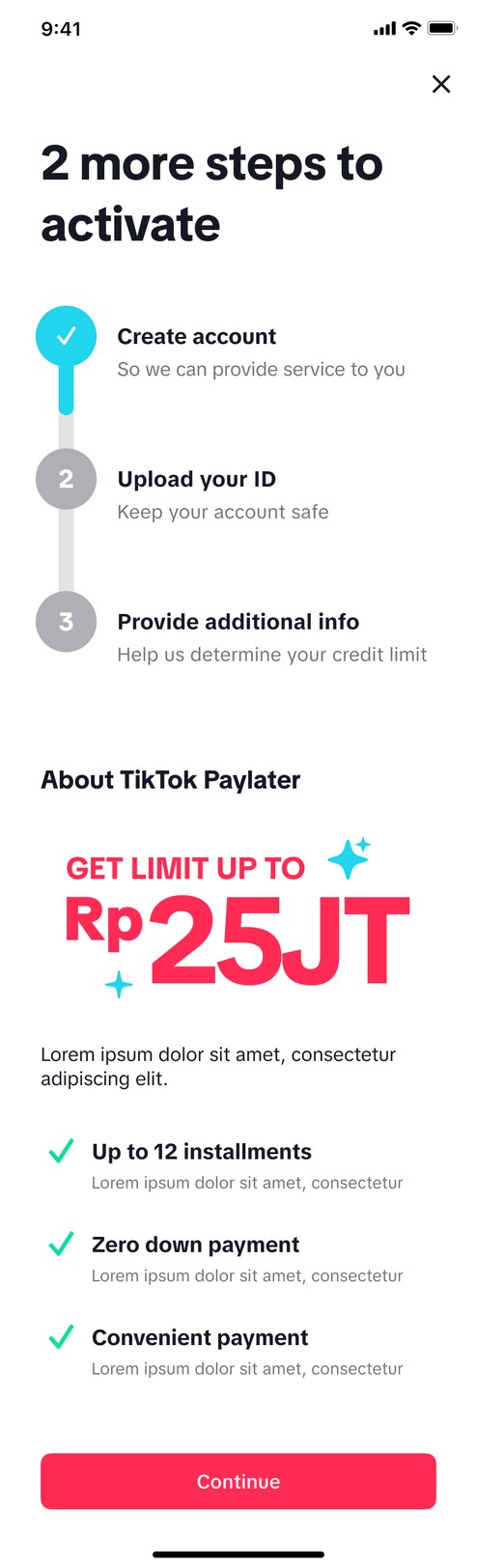
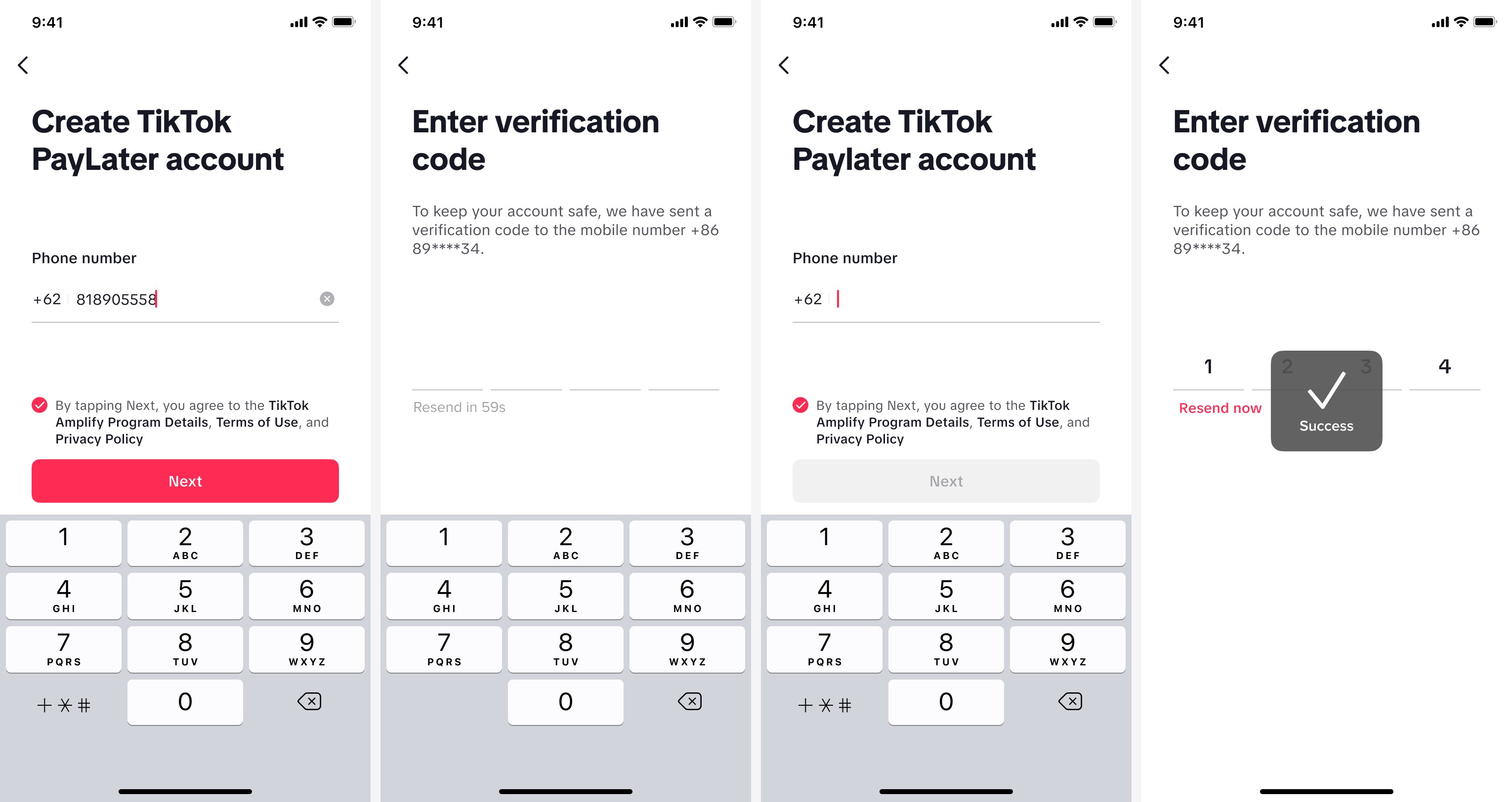
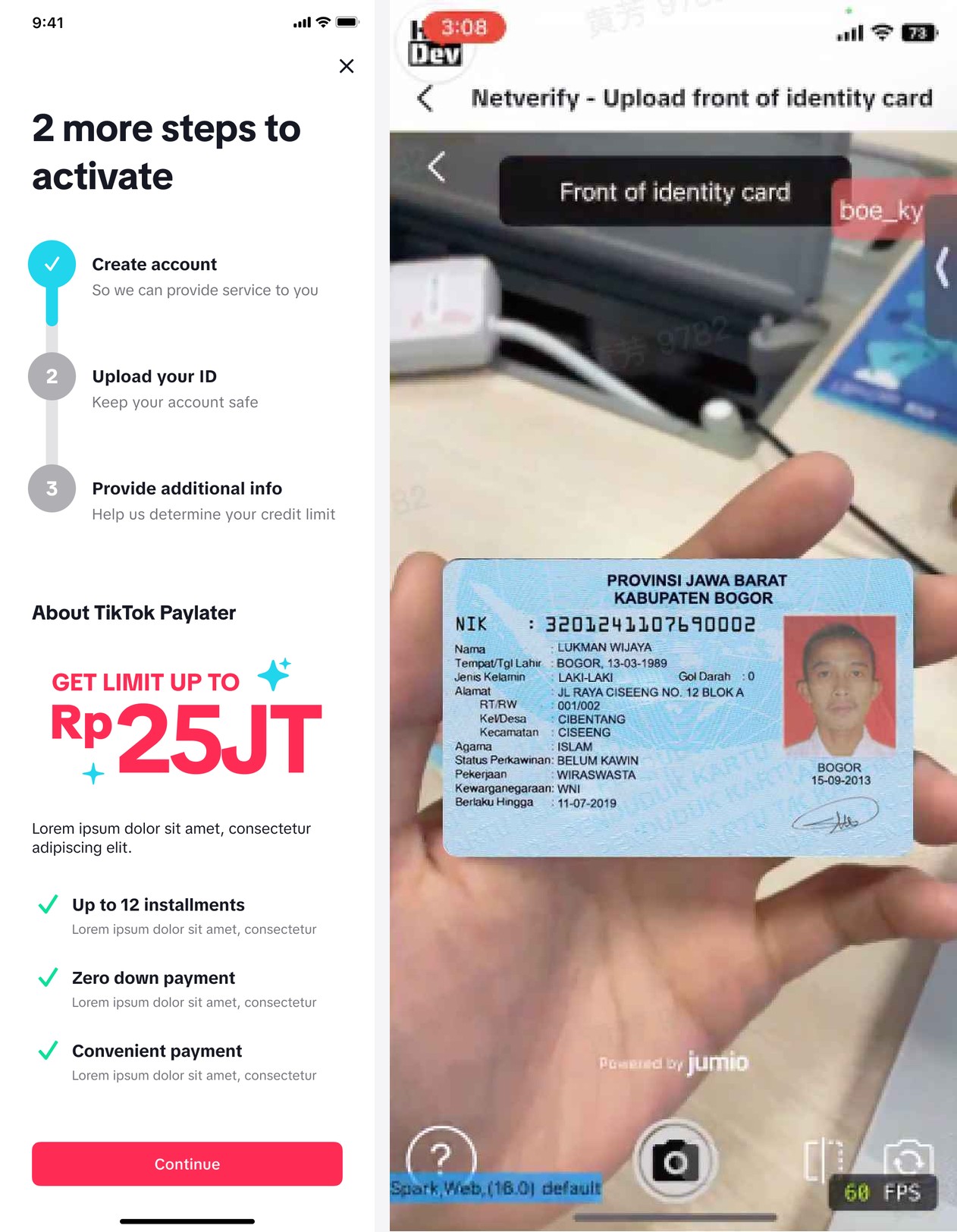
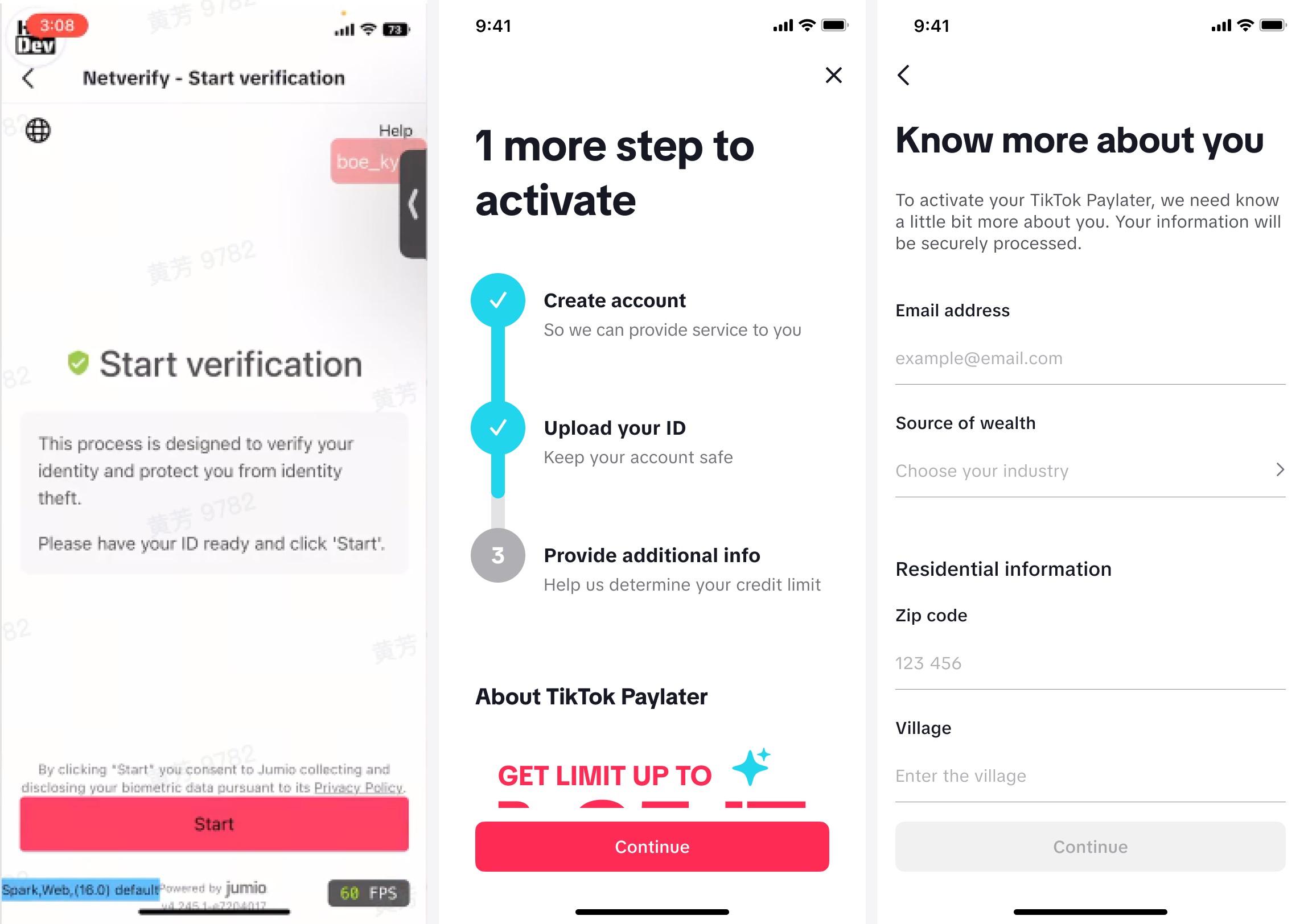
The full credit flow requires: phone verification → ID document scan (Jumio) → facial recognition → personal info form → repayment date selection. A 7–8 step journey competing with every distraction TikTok is designed to offer.
完整授信流程涵盖:手机号验证 → 证件扫描(Jumio)→ 人脸识别 → 个人信息填写 → 还款日设置。 7-8 步的超长链路,还要跟 TikTok 平台本身所有令人分心的内容竞争用户注意力。
Decision: restructure into 3 progressive tasks, each with a completion reward.
设计决策:将流程拆成由易到难的 3 个任务,每完成一个给予用户一次激励反馈。
Equally critical: a breakpoint resume mechanism. Users who exit mid-flow return to exactly where they left off — the system detects their state via risk controls and drops them into the right task on the landing page (shown left).
同样关键的是断点续做机制。中途退出的用户再次进入时,系统通过风控判断其当前状态,直接将用户带回未完成的任务节点,无需重新开始(见左侧 Landing 页)。
Why progressive tasks work: Milestone framing ("complete 3 tasks") consistently outperforms indeterminate form framing. Each completion event provides a moment of positive reinforcement, reducing abandonment between steps.
为什么任务分段有效:里程碑式的框架("完成 3 个任务")在转化率上持续优于不定长的表单形式。每个任务完成都提供一次正向激励,有效降低中途放弃率。
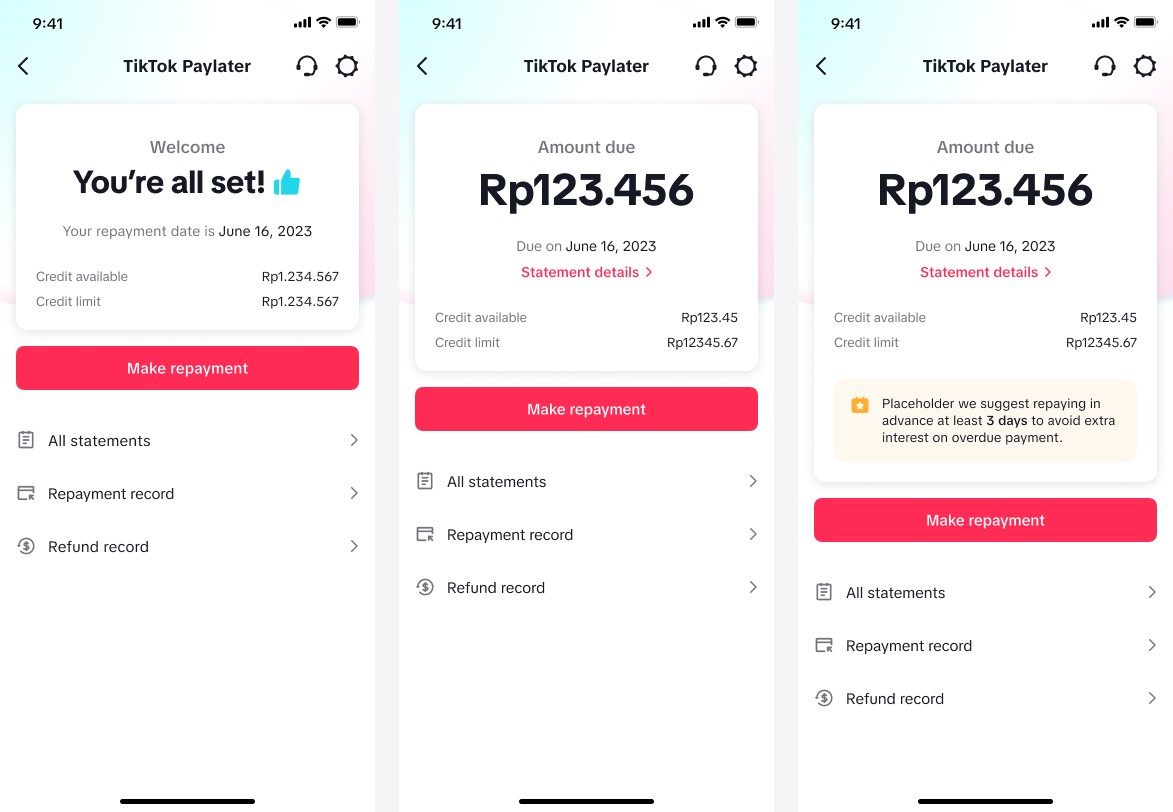
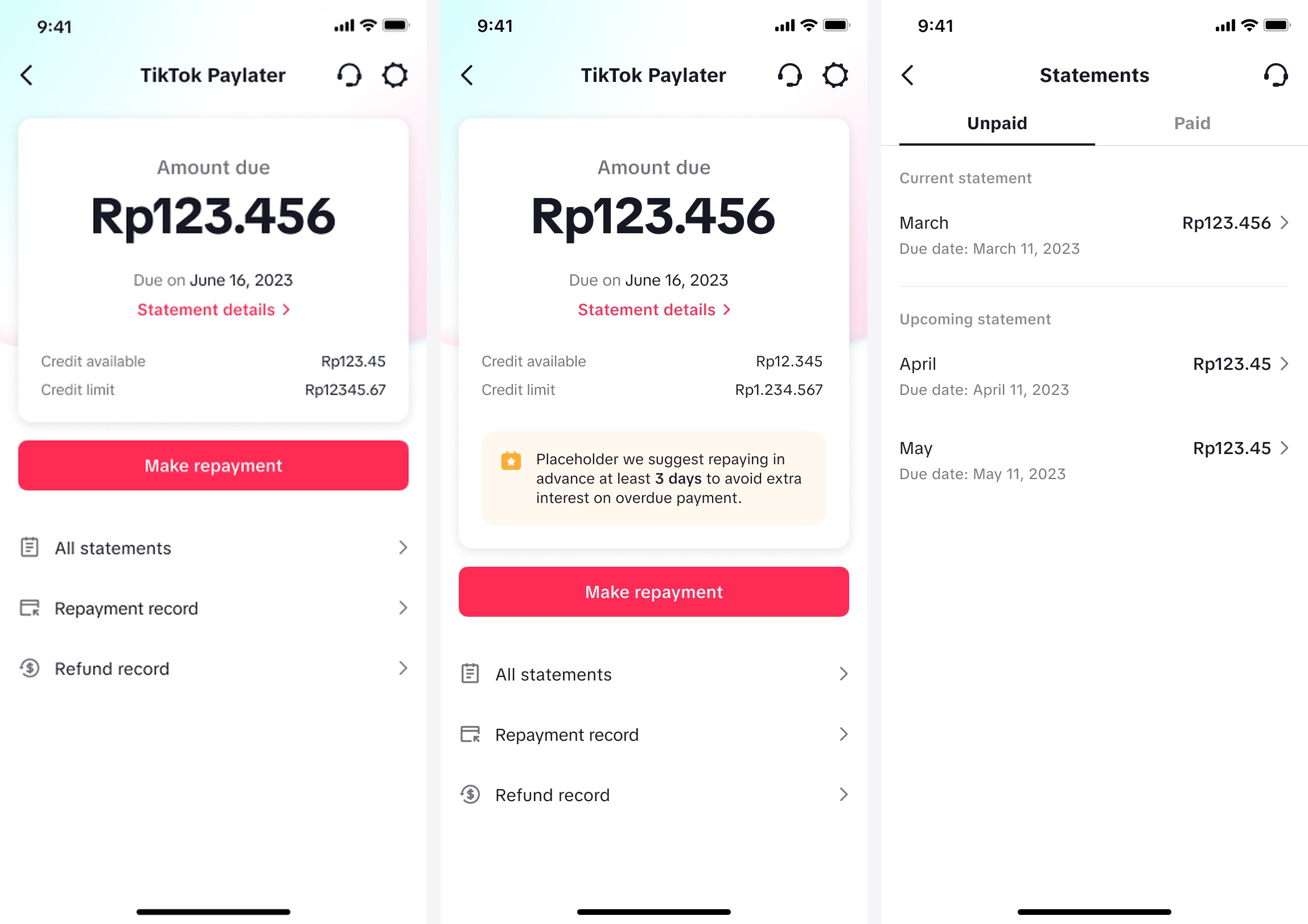
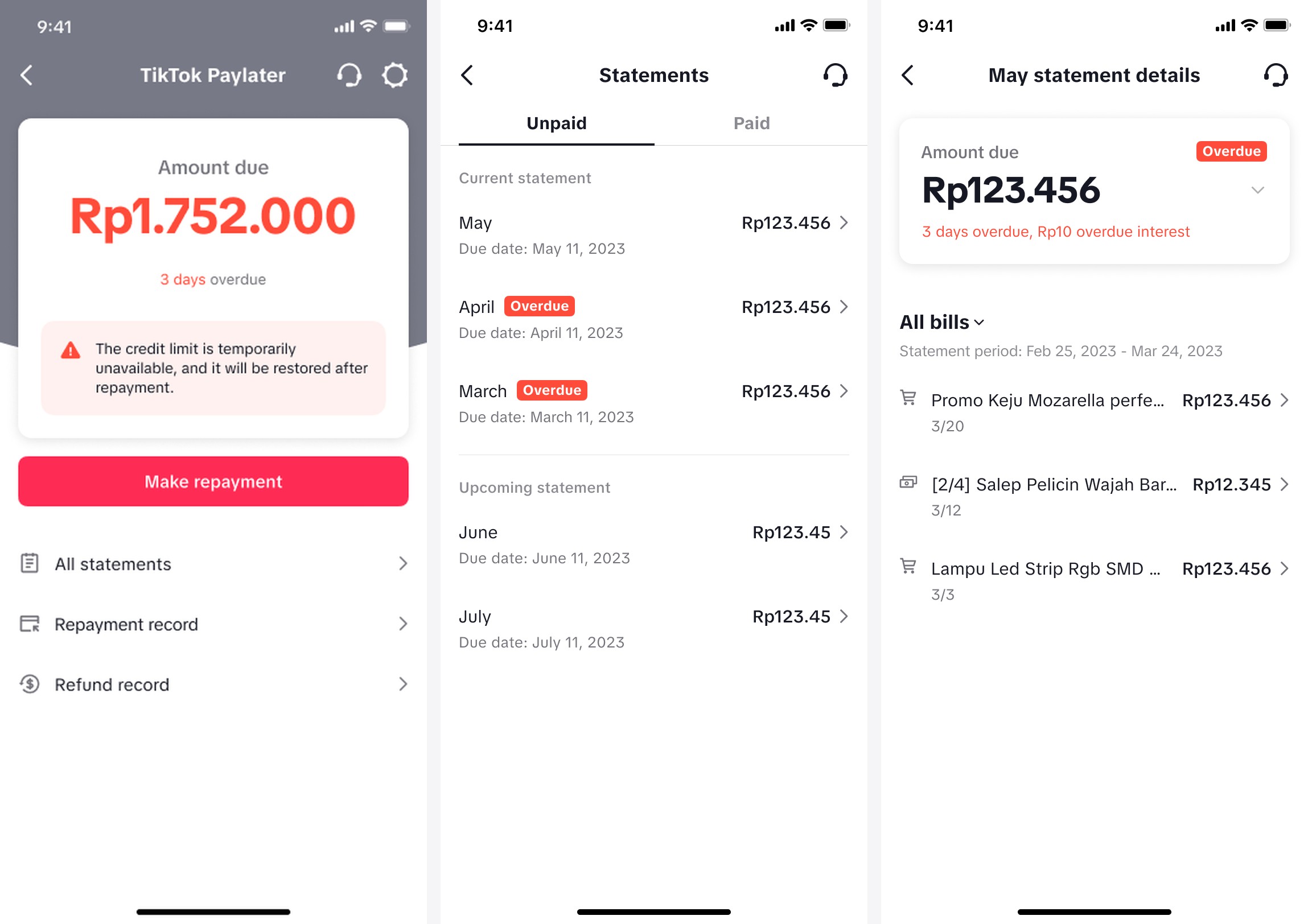
The account homepage is every return user's first screen. It needs to communicate the user's financial state clearly and drive the right action — across six meaningfully different situations.
账户首页是每个回访用户的第一个画面。它需要在六种截然不同的状态下,清晰传达用户当前的财务状态并引导正确的行为。
Account homepage across states: new user / outstanding / approaching due date
账户首页各状态:新用户 / 有欠款未逾期 / 距还款日剩余 X 天
Statement list and bill detail pages
账单列表页与账单详情页
Overdue state: multi-bill view with overdue markers
已逾期状态:多账单视图,带逾期标记
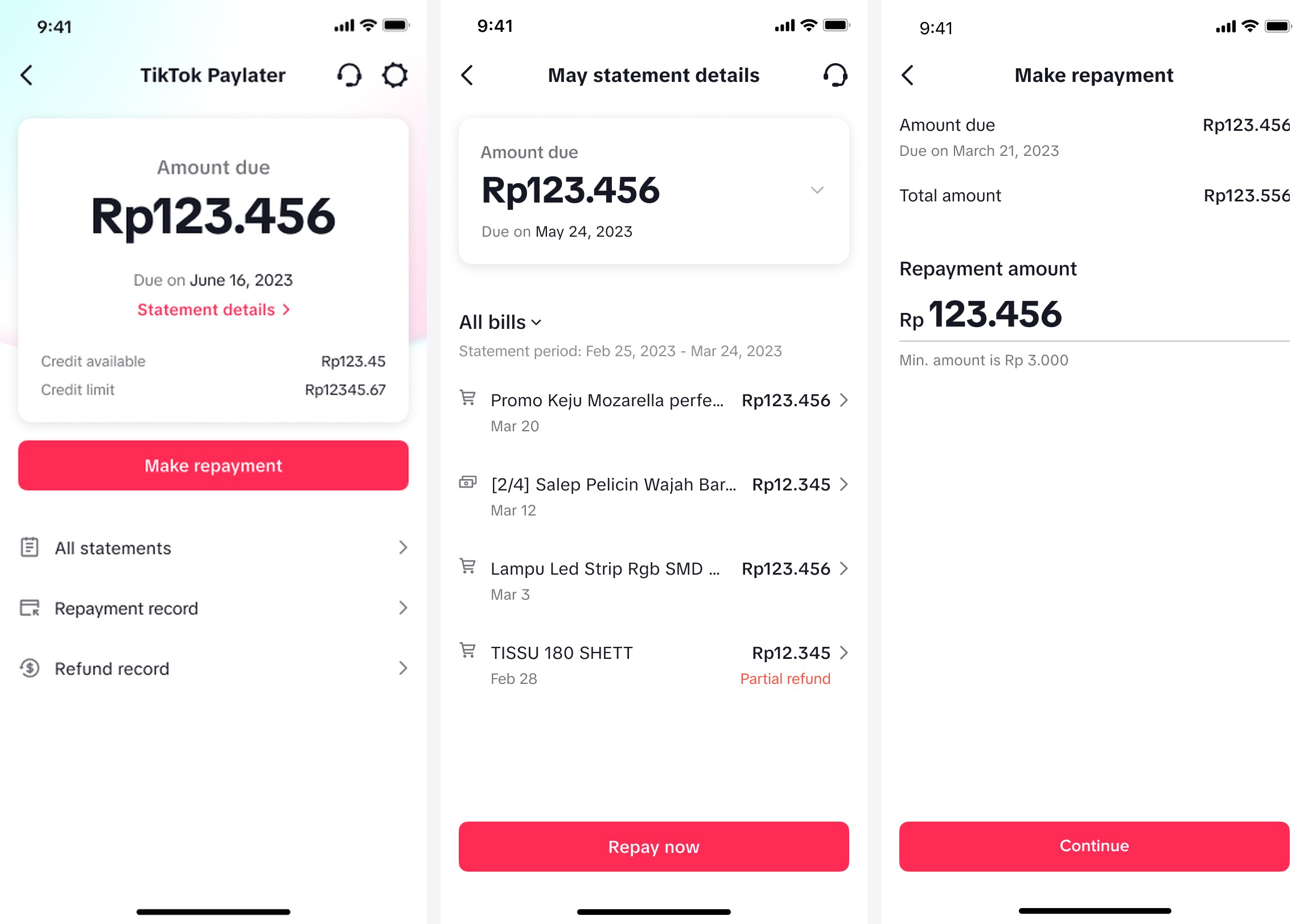
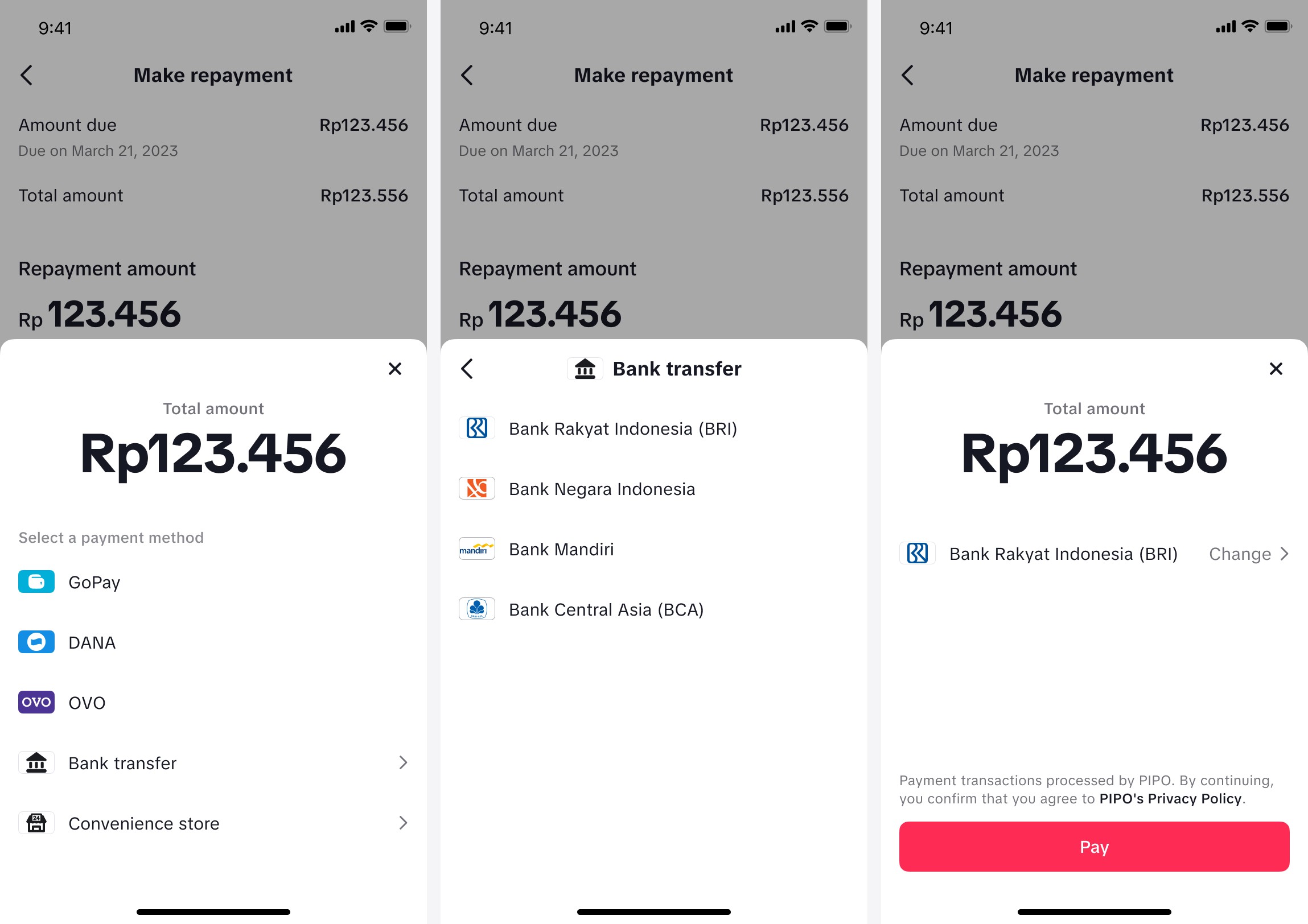
TikTok PayLater uses account-level repayment. I used internal PIPO payment performance data to rank channels by success rate — guiding users toward higher-probability payment paths.
TikTok PayLater 采用账户维度还款。我使用内部 PIPO 支付数据,按支付成功率对渠道进行排序,引导用户优先选择成功率更高的支付路径。
Repayment entry points and amount confirmation screen
还款入口与金额填写页
Payment channel selection — GoPay, DANA, OVO, Bank Transfer
支付渠道选择页 — GoPay、DANA、OVO、Bank Transfer
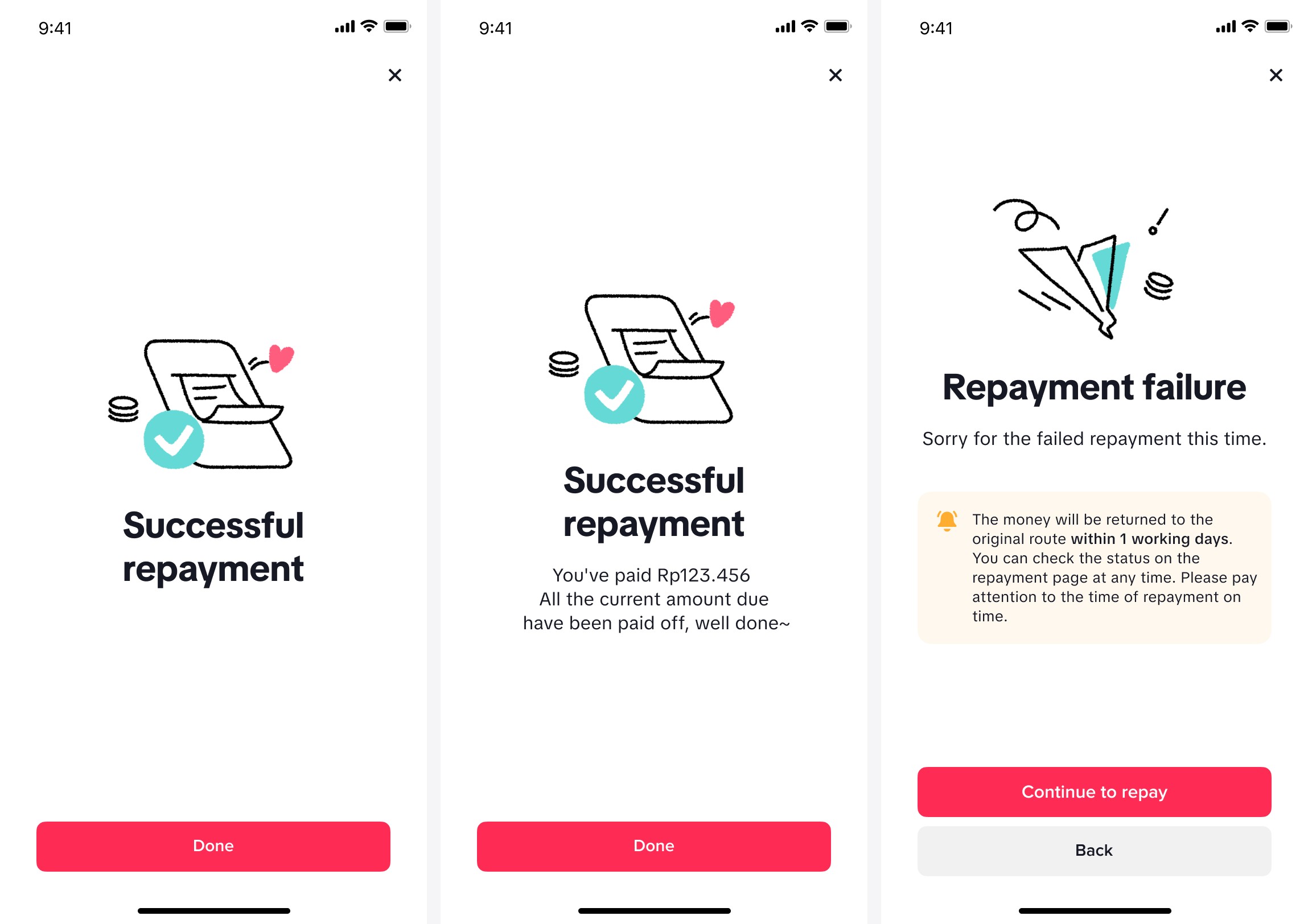
Repayment result screens: success and failure states
还款结果页:成功与失败两种状态
Beyond the flows, I maintained a live risk register — potential experience failures that wouldn't block launch but would generate friction or support volume at scale.
除了流程设计本身,我还维护了一份体验风险清单——这些问题不会阻止上线,但在规模化后会持续产生摩擦和客诉。
| # | Risk | 风险 | Module | 模块 | Plan | 后续计划 |
|---|---|---|---|---|---|---|
| 01 | Form length reduces credit application conversion | 表单过长影响转化率 | Credit / 授信 | Negotiate minimum required fields with all stakeholders | 与各方协商精简必填字段 | |
| 02 | PIN forgetting — infrequent use, complex recovery | PIN 易遗忘,找回流程复杂 | Credit / 授信 | Introduce face recognition as alternative auth | 引入人脸识别作为替代核身手段 | |
| 03 | Phone number and ID cannot be modified post-submission | 手机号和证件信息提交后无法修改 | Credit / 授信 | Prioritize edit capability based on support volume | 根据客诉量排优先级增加修改能力 | |
| 04 | Jumio fails on iOS 14 (≈0.3% of Indonesian market) | Jumio 在 iOS 14 上无法使用(印尼市场约 0.3%) | Credit / 授信 | Evaluate alternative KYC vendors or in-house solution | 评估其他 KYC 供应商或自研方案 | |
| 05 | Available credit limit not visually prominent | 可用额度在视觉上不够显眼 | Account / 账户 | Test alternative visual hierarchies in user testing | 在用户测试中验证调整后的视觉层级 | |
| 06 | Insufficient bank options in repayment channel list | 还款渠道中银行选项不足 | Repayment / 还款 | Competitive audit of bank channel coverage | 梳理和竞品的银行渠道覆盖对比 |
Why a risk register matters: In fast-moving product environments, reviews focus on what's shipping. Proactively naming post-launch risks — and attaching owners and timelines — converts invisible costs into decisions that can actually be made. It's the difference between firefighting and prevention.
为什么风险清单重要:在快速迭代的产品环境里,评审会议往往聚焦在即将上线的功能上。主动命名上线后的潜在风险,并为每条风险附上负责人和计划,是把隐性成本转化为可执行决策的关键——这是防患于未然和事后救火的本质区别。
I left ByteDance before the July 2024 launch and no longer have access to internal metrics. Public signals confirm the commercial significance of what shipped.
我在 2024 年 7 月产品上线前已离职,无法获取内部运营数据。但以下公开信号印证了产品的商业价值。
Following the launch, GoTo explicitly named TikTok Shop as a priority channel for expanding BNPL and payment services — signaling the product moved well beyond pilot status into a strategic growth line.
上线后,GoTo 明确将 TikTok Shop 列为扩展 BNPL 和支付服务的优先渠道——这意味着这款产品已经超越试点阶段,成为 GoTo 的战略增长线。
Excessive form fields were a known risk from week one. I should have pushed to negotiate a leaner field set much earlier — waiting for post-launch data to force the conversation is a slower and more expensive path.
表单字段过多的风险从第一周就已识别。我应该更早、更坚定地推动各方协商精简字段——等上线后用数据倒逼,是一条更慢也更昂贵的路。
I identified the PIN forgetting risk early but treated face recognition as a future iteration. In retrospect, I'd have made it a launch requirement — the risk was too predictable to defer.
我很早就识别了 PIN 遗忘的风险,但把人脸识别当成后续迭代项处理了。回头看,我应该将其列为上线必要条件——这个风险太可预见,不值得推迟。
Biggest learning: In cross-functional environments with regulatory constraints (OJK compliance), design decisions are rarely owned by designers alone. The most impactful skill I developed here was translating UX risks into business and compliance language — giving PMs, legal, and partner institutions a reason to prioritize the right things. Design without that translation often stays on the backlog.
最大收获:在有监管约束(OJK 合规)的跨职能环境中,设计决策很少由设计师单独拍板。我在这个项目里最有价值的成长,是学会了把用户体验风险翻译成业务和合规语言——让 PM、法务和合作机构都有理由把正确的事情优先排上日程。没有这种翻译能力,设计往往只是停留在 backlog 里。